I first saw a kid resolve right into quiet beside an equine on a windy spring afternoon. The field tarpaulin flapped, a sound that usually sent him running for the exit. That day he pressed a palm to the gelding's shoulder, matched the increase of his breath, then searched for and claimed, "I can handle it." That sentence was not about the tarp. It had to do with having a body that commonly screamed too loud, and finding a living metronome that offered steadiness without words.
Horses welcome a various conversation concerning sensation. They are huge, warm, rhythmic, and receptive, and those qualities integrate into a based means to explore sound, texture, motion, and social cues. When prepared by qualified experts, equine-assisted solutions can be a safe, effective alternative for people dealing with sensory processing distinctions, anxiousness, ADHD, or autism, in addition to for teams seeking calmer communication in difficult environments.
This is a within consider how therapeutic horsemanship and equine-facilitated wellness create space for guideline, discovering, and self-confidence. You will certainly locate no miracle declares right here. The equines do not do the help us. They make the work possible.
What makes horses such potent companions for sensory challenges
A steed reads the globe with sensation. Skin twitches at a fly, ears scan individually for sound, unguis really feel the ground with precision. Their nerve systems are tuned for survival, which likewise implies they discover physical changes in others at tremendously great degrees. In method, this sensitivity ends up being psychophysiological feedback you can touch.
The heat of a steed's body and the persuade of the stroll commonly create an organizing rhythm. Many steeds relocate at around 80 to 110 steps per minute at a comfortable walk. That tempo is close to a controlled human relaxing heart rate and tends to soothe instead of shock. For several customers, the feel of a breathing, predictable companion is simpler to refine than the artificial buzz of a facility waiting space or a gym packed with echoes.
Horses supply clear, instant repercussions without pity. Enter a steed's space with too much pressure, and the horse moves away. Breathe, soften your shoulders, and the equine leans back in. It is relational feedback that maps directly to self-awareness. This is why equine-assisted activities can be powerful for stress and anxiety support with equines in addition to for ADHD equine finding out support. Interest and emotion appear in the equine's habits, then become discussable without aiming a finger.
What equine-assisted services consist of, and what they do not
The field makes use of overlapping terms, which can confuse households and referrers. In wide strokes:
- Therapeutic horsemanship usually indicates flexible riding and foundation under a credentialed instructor who customizes activities to fulfill individual objectives. Believe equilibrium, coordination, communication, and confidence with mounted and unmounted tasks. Equine-assisted services is the umbrella, covering equine-assisted coaching, psychological health and wellness sessions with licensed medical professionals, physical or work therapy on horseback, and equine-facilitated wellness programs that focus on strength and tension management. Experiential knowing with equines often shows up in school collaborations, leadership programs, or team structure with horses. These are generally unmounted and highlight communication, analytical, and team regulation.
These solutions are not replacements for dilemma treatment or intensive behavior therapy. They complement existing assistances. A weekly 45 to 60 minute session can strengthen sensory strategies from work-related treatment, turn coping strategies into personified practice, and supply a setting to evaluate social abilities with truthful responses from a 1,000 pound teacher.
A day in the sector: sensory-first planning
A well-run session really feels stealthily basic. Underneath is a choreography of security, sensory scaffolding, and option. When I construct a plan for a brand-new client with different treatment for sensory challenges in mind, I start with three anchors: foreseeable framework, rated input, and consent.
Predictable structure begins the moment feet hit gravel. Lots of clients favor a low-stimulus course to the barn and a quiet grooming area as opposed to the primary aisle. We keep the lighting secure, prevent solid fragrances, and utilize soft brushes before stiff ones. Helmets are fitted by a skilled staffer with slow-moving hands and a running narrative: "I'm raising the band, you can tell me if it really feels scratchy."
Graded input suggests we titrate experience the method you would approach a cool ocean, step by step. Foundation comes prior to riding, strolling beside the horse to feel his steps. If mounting is suitable, we make use of a block to lower the feeling of dropping up a wall. We begin with short, straight lines at a walk prior to turns or adjustments in rate. When someone reveals indications of flooding, we stop briefly and go back to hand on withers, match the breath, back to yes.
Consent is both moral and useful. It reduces fight-flight, constructs depend on, and instructs an internal signal for quit and go. We make use of clear invites: "Would you such as to try leading from the shoulder or staying by the hip?" "Are you okay with the horse moving better?" The horse's permission matters as well. If the equine pins ears during grooming, licks and chews, or shifts away repetitively, we deal with that as details. We can change devices, swap steeds, or take a sensory break with a hay net and distance.
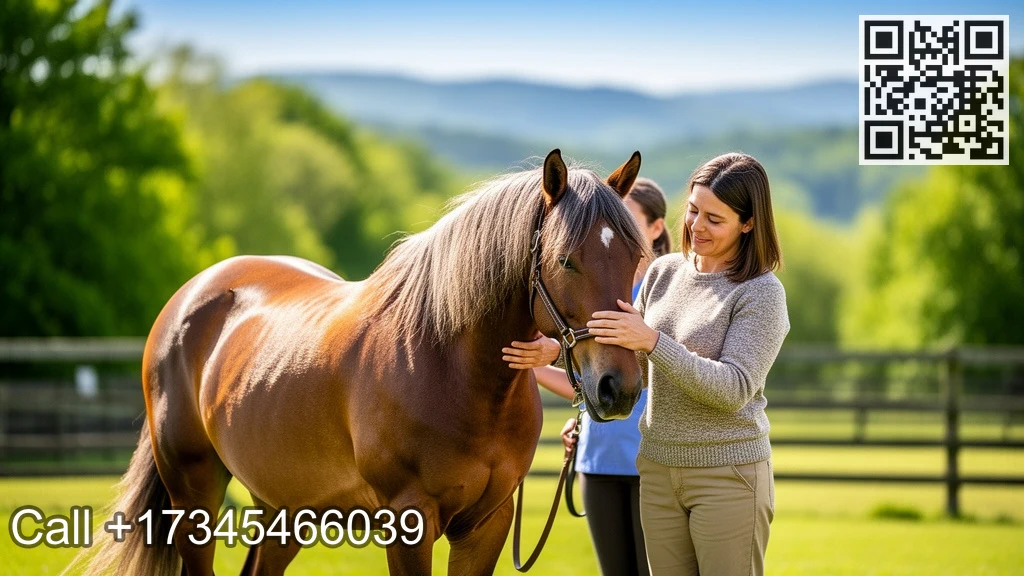
Here is a common 55 min session circulation for a customer working with sensory modulation and self-advocacy:
- Arrival and policy check: 5 to 7 minutes to work out, orient to the equine's place, select a brush or rope that really feels great in the hand. Connection on the ground: 10 to 15 mins of leading with basic patterns, practicing pace matching and spatial boundaries with aesthetic cones rather than spoken corrections. Mounted or deep-pressure activity: 10 to 15 minutes, often bareback pad for even more warmth and proprioception, in some cases a surcingle handle for safety. If installed is not ideal, we mimic with a heavy pad or pressure from a therapy sphere versus the horse's shoulder. Integration video game: 10 mins, such as ring throw at a stroll, target sticks, or a scavenger course that triggers look-listen-feel. Cooldown and language: 8 to 10 minutes grooming or hand grazing, identifying feelings and options made, ending with a specific success the client can name and own.
Notice that the moment on the horse is typically the smallest slice. The job is not regarding riding abilities for their very own sake. It has to do with developing a nerves that can observe, pick, and recover.
Safety and threat: genuine talk without drama
Horses allow, even the kind ones. Responsible programs keep event prices reduced with training and split safeguards. I anticipate to see staff accredited in restorative horsemanship instruction, safety helmets for all motorcyclists, and a society where any individual can call a stop. For customers with seizure background, breakable bones, recent blasts, or unchecked actions that include striking or attacking, installed job may be contraindicated. Unmounted equine-assisted tasks can still offer rich discovering with less risks.
We suit steed to client with intent. For an individual sensitive to unexpected noise, a more youthful, looky equine can be overwhelming. For a person hypo-responsive to input who looks for big experience, a round, swinging-backed draft cross could be ideal. We think about elevation at the withers, size of barrel, grooming resistance, and herd temperament. The quietest equine in the barn is not always the most effective educator. The ideal equine is the one whose feedback the client can refine without shutting down.
Equipment issues. A correctly fitted helmet is non-negotiable for installed work. We prevent loose jacket cables, dangling jewelry, and scratchy textiles that distract. For clients that like pressure, a snug security vest can be soothing. For customers who dislike tactile shocks, we prep the steed's coat so there are no flakes or burrs to activate an outburst midway with grooming.
Emergency planning is not a jinx. It is compassion. Staff rehearse gets down, know clinical info, and keep clear paths to leaves. If an electrical storm rolls in, we switch over to the indoor sector or relocate to unmounted jobs under a roof covering. When climate or footing is doubtful, we do not press it.
What the work really changes
Families ask what results to expect and how fast. Below is the pattern I see usually across ages 6 to 60, when clients go to weekly for 8 to 12 weeks:
- More precise interoception, those internal signals that state hungry, worn out, strained, or calmness. Individuals begin to name states and step in earlier. Reduced startle and enhanced recuperation. The arena contains small surprises. Discovering to orient, breathe, and continue ends up being automated over time. Clearer boundaries. Horses are unrelenting instructors of space. Clients generalise this to peers, siblings, and coworkers. Better interest changing. Leading a roughhouse a cone course requires looking in advance while feeling the line, while keeping an eye on rate and breathing. That mild juggling mirrors classroom and work environment demands in a nonjudgmental setting. Confidence improved skills. Not "You're so endure," however "You noticed the horse's ear flick and relocated your hand. He chose to follow you."
The research base around equine-assisted solutions has actually expanded, especially for autism equine finding out programs and trauma-focused job, although it is not uniform. Some research studies show tiny to tool improvements in social interaction, irritability, and flexible habits. Others reveal no considerable distinction contrasted to manage activities. From the expert side, the strongest gains come when equine sessions are incorporated with existing therapies, not siloed. As an example, a physical therapist may establish a sensory diet regimen that we equate right into barn jobs, and an institution team might mirror our cueing strategies in the classroom.
Stories from the rail
M., age 9, came with a diagnosis of autism and a long list of audio hostilities. Leaf blowers, sirens, the buzz of fluorescent lights might untangle a day. He met Cricket, a consistent mare with a low, swinging stroll. We played a basic "stop and pay attention" game around the field. When the tractor clanked distant, M. Reached down and grabbed a chunk of hair. He shut his eyes and counted to 4 on the inhale, six on the exhale, after that released. By week 6, his mom reported that he made use of the very same breath in your home when the neighbor trimmed. The lawn mower did not become a pal, but it lost its power to ravage dinner.
S., a 32 year old paramedic, came for equine-facilitated health to work on stress and anxiety and sleep. Mounted work was not part of her plan. We spent time with two horses in a tiny pasture and exercised co-regulation. S. Noticed that if she scrolled her phone while standing near the fence, the steeds wandered away. When she filched the phone, softened her upper body, and allow her eyes widen instead of slim, they strolled back. It took three sessions for her to determine the shoulders-forward, tunnel-vision position that she performed her entire change. She started to alter that habit in the area, and her crew reported fewer sharp words on lengthy nights.
R., 14, with ADHD, tossed power into every little thing. Halters flew, lead ropes snapped tight, and horses avoided him. We framed a challenge: can you lead two cones apart without touching the rope, utilizing just your feet and breath? He fell short five times. On the sixth, he murmured "stroll with me," and the steed matched him. That minute converted right into a plan for changes at college: stop, anchor feet, breathe in, exhale, relocate. His instructors began making use of "stroll with me" as a cue. It is difficult to suggest with a technique that originated from a thousand pound pet accepting follow your lead.
Somatic healing with steeds: what that expression actually means
Somatic recovery with steeds can sound grand if you visualize magical transformations. The fact is quieter. We use the body as a primary site of finding out because steed and human interaction lives in breath, stance, and micro-movements. An equine-facilitated training session may include observing where anxiousness sits in the chest while standing near a curious gelding, after that trying out a shoulder decrease and a longer exhale to see if the horse picks to stay. The equine's response offers real-time information, and the customer has a symbolized memory to get in touch with later.
This physical-first language aids people who battle to accessibility words under stress. It additionally assists those that have learned to bypass their body's signals to please others. The arena rewards honesty. If your hands shiver, the horse tells you. If you fake tranquility, the equine tells you. Gradually, the responses loophole constructs tolerance for sensation and the abilities to regulate it, which is the heart of alternative treatment for sensory challenges.
Coaching, counseling, and riding: selecting the best doorway
Equine-assisted coaching focuses on goals and forward movement: management, interaction, durability. It can be individual or team based, and it often shows up in corporate or neighborhood setups. Team building with steeds provides coworkers a shared, novel task that exposes exactly how they take care of anxiety with each other. I have enjoyed a manager find out more regarding delegation in one 90 min herding exercise than in a month of memos.
Equine-assisted activities and flexible riding are ideal when sensorimotor goals issue: equilibrium, trunk control, sequencing, and complying with instructions. If a customer will benefit from the rhythmic movement of the horse to arrange the nervous system, placed work under a licensed teacher deserves exploring.
Equine-assisted solutions delivered by a mental health and wellness specialist are most suitable when trauma, state of mind problems, or facility stress and anxiety are main. The medical professional guides emotional handling with the equine as co-facilitator. Procedure might stay unmounted to lower stimulation and optimize relational learning.
The entrance matters much less than the high quality of the program and the clarity of your objectives. Numerous barns mix offerings. What you want is a group that pays attention, interacts with your various other companies, and tracks end results in greater than cozy fuzzies.
The logistics households and teams ask about
Access and price vary with region. In my location, a private-pay adaptive riding lesson runs 60 to 100 bucks per session, with scholarship funds covering 10 to half for qualifying families. Psychological health and wellness sessions with a qualified clinician typically set you back 120 to 180 bucks. Some insurance strategies compensate when solutions are billed under job-related or physical therapy with correct coding. Waiting lists can be long. Placing your name down early and remaining versatile on days helps.
Programs with interior fields can operate year-round. Outdoor-only websites commonly run March with November, after that move to unmounted wintertime shows. Strategy ahead for footwear and garments. Closed-toe footwear with a tiny heel, layers without hanging strings, gloves for chilly mornings. For customers with tactile defensiveness, bring a known-soft base layer so we do not combat the feel of a brand-new shirt and a brand-new environment at once.
Herd selection is not random. A program horse string typically includes stable older people, a couple of middle-aged educators that request for precision, and one or two more youthful potential customers in training that only work with sophisticated customers. Horses are not instantly less complicated. Some hate being cleaned greater than big equines do. Draft crosses often tolerate noise and uniqueness far better than fine-boned breeds, however the fit depends on personality, not just type.
How we adjust for details profiles
For autism equine discovering programs, predictability is the priority. Aesthetic schedules at the sector gate, regular brushing stations, and repeated patterns lower cognitive lots. We script social expectations in basic expressions: "Ask, https://penzu.com/p/7231fa365714c5c5 wait, see." We keep goals little and specific: touch 3 body parts with a soft brush, cause the letter B, halt with both feet still for 3 secs. Success constructs momentum.
For ADHD equine discovering assistance, motion is not the enemy. We provide the body a job. Carry a post, count strides out loud, toss a ring at every 3rd cone. We shape impulse control with instant, all-natural consequences. If you hurry under the steed's neck, the session stops briefly. If you observe the urge and go back, you earn a brand-new challenge. Focus rises when the task matters and the responses is clear.
For stress and anxiety assistance with steeds, we address anticipatory anxiety. We set up exposures that really feel selected and titrated. Walk near a steed with a fence between you. Progression to brushing with a 2nd individual holding the halter. Consider installed work just when curiosity slips by dread. We instruct skills in the silent times, not at the height of panic: box breathing, orienting to 4 edges of the sector, calling 5 colors in the space.
For sensory seeking accounts, we add deep stress alternatives that stay safe for the horse: leaning lower arms into the withers as opposed to full-body hugs, curtaining a weighted pad across the lap while mounted, pushing a shoulder into a hay bale. For sensory avoidant profiles, we utilize devices that reduce strength: soft curry gloves, range touch with a long wand, or brushing through a towel obstacle until resistance grows.
When it does not function, and what we do next
Equine-assisted offerings are not a cure all. Occasionally the barn is just excessive. The dust, the birds, the means sound bounces in a steel sector, the odor of manure. Some clients can not access finding out because their baseline stress and anxiety is sky-high. Others are burnt out by the sluggish rate and like basketball or dancing. If we do not see indicators of involvement by the fourth session, I call a conference. We review objectives, try a various steed or setup, or we pause solutions and refer out. Maintaining a sense of option and dignity beats holding on to a method that does not fit.
On the flip side, success can create stress to do more, much faster. A child that discovers to run without hands might plead to canter not really prepared. A team that bonds over a round pen challenge may want to bring 30 individuals following time, frustrating the herd. Component of our work is to hold a thoughtful speed. The nerve system finds out in increments. We allow development work out, after that stretch again.
Integrating the barn with day-to-day life
The actual worth appears between sessions. We develop straightforward bridges. An image of the equine's interested ear becomes a phone wallpaper hint to soften your shoulders. A lead rope clip in a backpack pocket reminds a pupil to inspect pace in the corridor. A group adopts a shared phrase from the field, like "clear the cone," to mean plan your path prior to you speak.
Families commonly report adjustments in changes at home. The pre-dinner crisis shifts when the regular includes 3 mins of outside strolling matched to the equine's rhythm. Sleep boosts when a child makes use of "withers breath" - a hand on their own breast, a matter of four in and six out, the means they exercised on a warm shoulder. Colleagues discover that a 90 2nd reset at the photocopy machine, feet grounded and eyes soft, protects against a blow-up at 3 p.m.
A quick checklist for choosing a top quality program
- Qualified team: Try to find teachers certified in healing horsemanship, licensed medical professionals for psychological health services, and ongoing training documented. Safety society: Helmets for mounted job, clear emergency situation plans, steed well-being focused on over schedules. Collaboration: Will they consult with your OT, college team, or therapist and align goals? Horse fit: Selection of steeds, honest conversation of why a particular horse is chosen for you. Outcome tracking: Concrete objectives, session notes you can understand, and routine development reviews.
Cost-benefit judgment and moral care
Every supportive solution asks families and companies to consider money, time, effort, and return. If you drive 40 mins to the barn and the gains only show up in the arena, it is not nearly enough. We go for generalization right into college, job, rest, and relationships. That is why we keep the goals useful and ask you to practice at home.
Ethically, we owe steeds an excellent life. They are not tools. Programs that appreciate the herd set reasonable workloads, turn rest days, maintain herds in social groups with turnover, and retire horses gracefully. Customers discover what it indicates to look after a partner: grooming in the past and after, seeing pain, asking for and honoring permission. That belongs to the recovery. Feeling powerful without overpowering is an ability that transforms how we move via the rest of the world.
Final ideas from the crushed rock path
The barn is not magic. It is truthful. Equines show the state we bring, after that await our following step. For people whose senses misfire or overwhelm, that waiting is a gift. It provides time to see a breath, adjust a hand, make a various option. Over weeks, those small options construct into a body that counts on itself regularly. That does not erase challenges. It widens the window where a person can fulfill them.
If you are considering equine-facilitated coaching for management tension, restorative horsemanship for your kid's coordination and confidence, or equine-assisted services as an adjunct to therapy, start with a conversation at a trusted barn. Ask to see a session. Walk the fence line at sunset and listen to the herd breathe. You will certainly understand, within a short time, whether this is the right place to exercise feeling safe in your very own skin. And if it is, the job that adheres to will certainly be steady, particular, and real, the kind that holds up outside the field gate.